overview

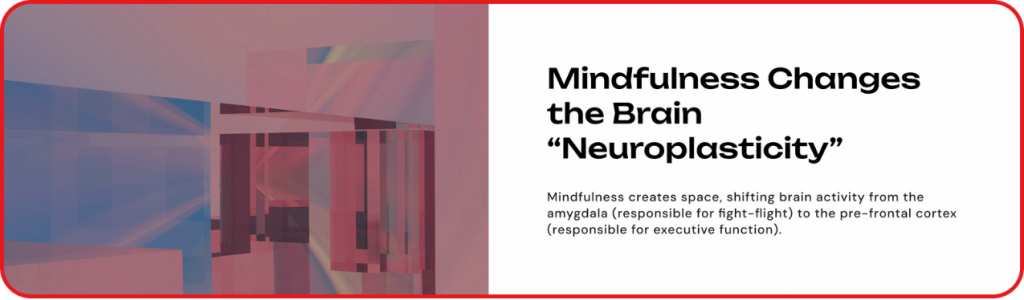
Scientists have shown that your mind and brain routinely change each other. Recent research into neuroscience has shown that mindfulness practices and strategies can result in physical changes in the brain.

We Will Explore:

  • What is the neuroscience of mindfulness?
  • The key parts of the brain and how they impact experience in relation to stress and well-being
  • The chemicals of the brain that affect attention and happiness
  • What is perception and how does our perception affect our experience
  • What is the relationship between the body and mind?

Objectives

  • Understanding the neuroscience of mindfulness.
  • Examing the effects of neuroplasticity in everyday scenerios. 
  • Recognizing the chemicals that impact our behaviour.

Quote

Neuroscience reveals that mindfulness physically alters the brain to enhance emotional resilience, focus, and self-awareness. ~ Heidi Bornstein

Key Points About Neuroscience

  • The brain changes with experience – neuroplasticity.
  • Healthy habits can impact the optimal functioning of the brain – focus on sleep and food choices.
  • The key parts of the brain and how they impact the experience of stress and well-being.
  • Perception affects our experience.
  • The chemicals of the brain impact attention and happiness.

Arriving Practice: Colouring to Music

Colouring to Music

Listen

Materials

Coloured pencils, pens, markers, coluring pages or blank paper.

Instructions

Take a few minutes to color or doodle, silently, listening to indigenous flute music. 

Reflection Question

  • How does this practice make you feel?

Check-in Practice - Rose-Thorn-Bud

Rose-Thorn-Bud

Listen

The Check-in Practice (Rose, Thorn, Bud) is a structured check-in exercise that promotes mindfulness, self-awareness, and emotional regulation. It balances gratitude and realistic problem-solving by categorizing experiences into three areas:

Benefits

  • Develops Mindfulness and Gratitude: Regularly reflecting on “roses” and “buds” helps shift your focus from daily stressors to things you are genuinely grateful for, which increases overall happiness.
  • Builds Emotional Awareness: Labeling a “thorn” allows you to acknowledge negative feelings without becoming overwhelmed by them.]
  • Fosters Better Communication: Whether used in a relationship, a family setting, or a workplace, it provides a safe, low-pressure framework to share vulnerabilities and ask for help.
  • Identifies Areas for Growth: Assessing thorns and buds helps you target exactly what needs to change, allowing you to brainstorm actionable steps to move forward.

Reflection Question

  • What strategy can you use to transform your “thorns” into “buds”?

Neuroscience & Mindfulness

Neuroscience Of Mindfulness
4-Minute Video

Understanding The Brain
By Director X

Neuroplasticity

You can rewire your brain and strengthen neural connections

Watch Video about Neuroplasticity

Relevance Questions

  • How do your ideas about the world and life impact your experience of it?
  • Can you challenge any of YOUR own negative beliefs?

Dopamine

Lack of Dopamine is Associate with...

  • Fatigue
  • Apathy (just not caring about a lot of stuff)
  • Lack of focus/difficulty concentrating
  • Forgetfulness
  • Moodiness
  • Insomnia
  • Sugar cravings
  • Lower motivation

Do ANy Apply to You?

  • If you answered yes to several of these, you may have a dopamine deficiency.
  • Dopamine is one of the over 100 neurotransmitters in the human brain.
  • Often called the “motivation molecule,” dopamine provides the drive and focus you need to be productive.
  • It is heavily involved with attention span, focus, follow-through, motivation, and the ability to experience pleasure.
  • Dopamine-dominant people are usually focused go-getters and a little intense. 

Dopamine & Serotonin Pathways in the Brain

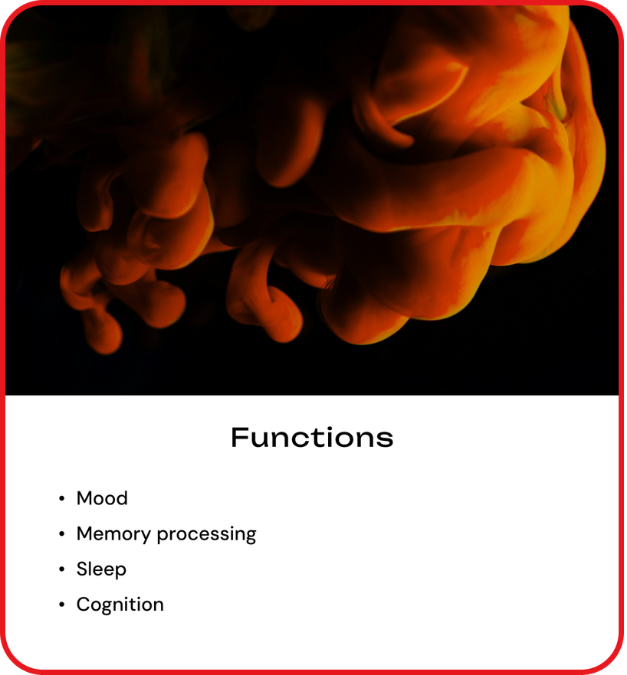
Serotonin Pathways

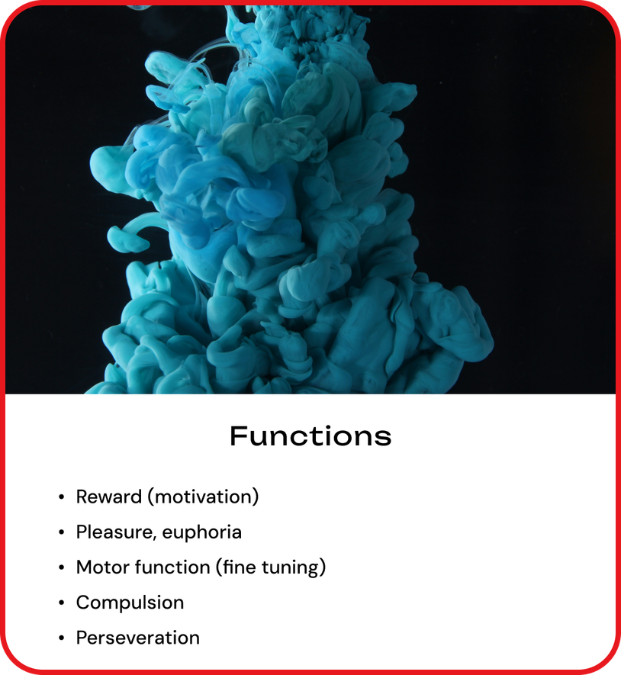
Dopamine Pathways

Healthy Dopamine Boosters

Exercise Regularly

Physical exercise is one of the best things you can do for your brain. It increases the production of new brain cells, slows down brain cell aging, and can increase your levels of dopamine.

Practice Mindfulness

Overall health benefits of mindfulness have been demonstrated through hundreds of research studies. Many have shown mindfulness increases dopamine, i.e., improved focus and concentration.

Sleep

To ensure that your brain increases dopamine naturally, make sure that you’re getting enough sleep. Lack of sleep reduces concentrations of neurotransmitters, including dopamine, and their receptors.

Listen to Music

It is no surprise that listening to music can increase pleasurable feelings, improve mood, boost energy, and help with focus and concentration.

Small Achievable Tasks

When you achieve this task (e.g., organizing my messy binder) your brain will reward you with a shot of dopamine—a small surge of happiness.

Seek out new experiences

The brain loves novelty; keep trying new things; cultivate the mindful attitude of curiosity.

Choosing Dopamine Boosting Foods

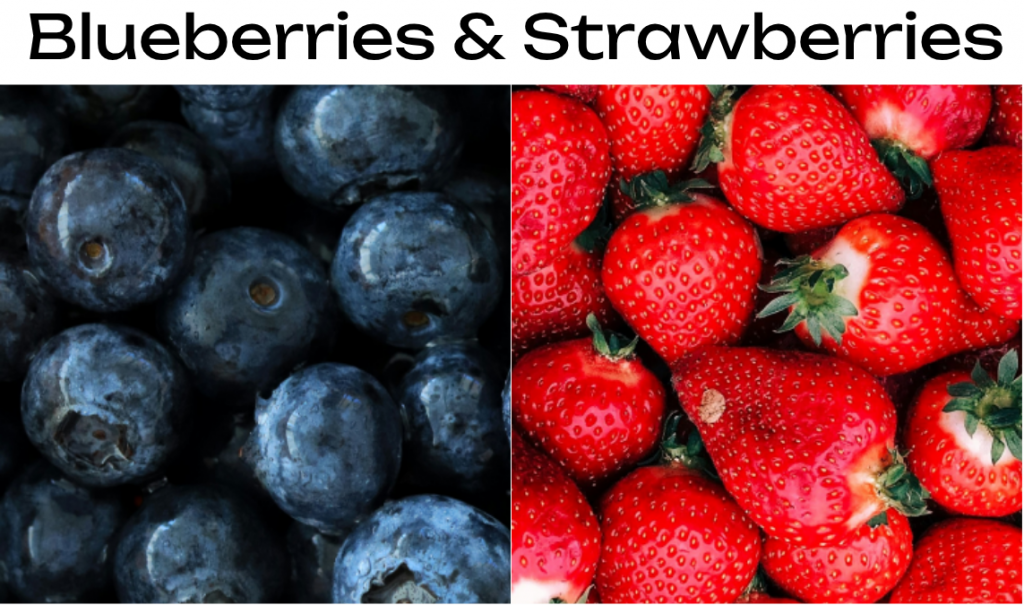
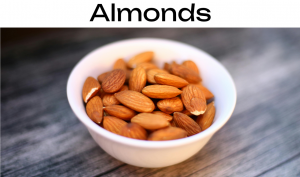
Other High-Tyrosine Foods: Protein Foods – Seafood, Meat & Poultry, Eggs, Beans, Dairy, Seeds

  • Which ones do you like?
  • Which ones could you incorporate into your diet?

Focus Practice - Figure-4 Hip Stretch

Figure-4 Hip Stretch

Watch

The Figure 4-Hip Stretch directly targets deep glute and outer hip muscles. It is highly effective for relieving lower back tension, preventing sciatica, improving hip mobility, and counteracting the effects of prolonged sitting. 

This is a practice which uses stretching and balancing as a dopamine break, increasing focus and boosting dopamine. This is a great, quick activity to do when you have been seated for a long period of time. 

Reflection Questions

  • Where in your body did you feel this stretch?
  • Did you lose balance at any point in this activity? If so, how did that make you feel?
  • Was one side more challenging than the other? 

Benefits

  • Relieves Lower Back Pain: Prolonged sitting often tightens the glutes and hips, forcing the lower back to compensate. The stretch relieves this tension, taking extra strain off the spine.
  • Improves Sciatica Symptoms: By specifically targeting the piriformis muscle—a deep glute muscle that can compress the sciatic nerve—it reduces stiffness and nerve irritation.
  • Boosts Mobility and Flexibility: Regular stretching increases your hip joint’s range of motion, making everyday tasks, squats, and running feel much easier.
  • Accessibility: Because it can be performed while lying down, seated in an office chair, it’s easy to do almost anywhere.

Intentional Breath Practice - Comparing 5-Finger & the Hoberman Sphere

Comparing 5-Finger & the Hoberman Sphere

Watch

Intentional Breathing and the Parasympathetic Nervous System

Benefits

Intentional breathing triggers the parasympathetic nervous system (the “rest and digest” mode), lowering heart rates and reducing stress.

Reflection Questions – Comparing 5-Finger & the Hoberman Sphere:

  • Of the breaths we practiced, which one did you enjoy most?
  • Not enjoying at all?
  • Which breath helped calm the nervous system for you?
  • When your attention wandered, were you able to use either breath practice as an anchor for your attention? 

Five-finger Breathing 

FIve-finger Breathing is a multisensory technique that combines deep breathing with physical tracing of the hand. 

Benefits

By synchronizing slow inhales and exhales with hand movements, it interrupts anxiety cycles, regulates the nervous system, and promotes deep relaxation.

Hoberman Sphere Breathing

The Hoberman Sphere Breathing practice uses an expandable geometric ball to provide concrete visual and tactile pacing for deep breathing exercises, making the abstract concept of breathwork tangible. For those whose minds wander easily, the fluid motion of the ball acts as a powerful point of focus. 

Benefits

Expanding the sphere during an inhale and contracting it during a slow exhale triggers the body’s parasympathetic nervous system, transitioning the body from “fight-or-flight” to a calm “rest-and-digest” state.

Healthy Habit

Sleep Time

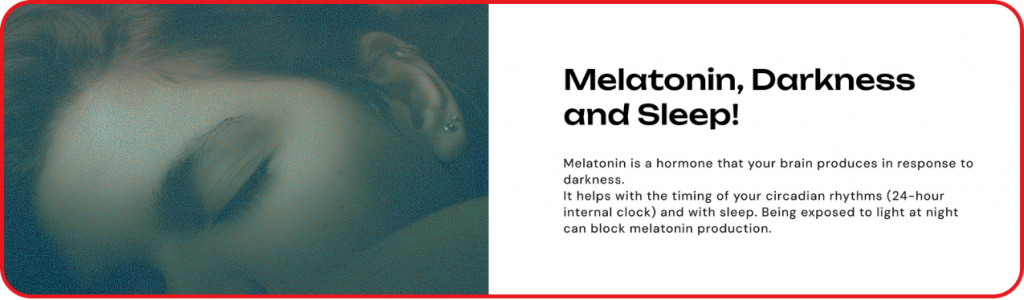
When we give the brain the rest it needs, we consolidate learning and recover from the experiences of the day.

According to the Public Health Agency of Canada, teens (14–17 years old) need 8 to 10 hours of sleep per night to function and develop at their best.

Getting consistent, adequate sleep is critical for teenagers, as this age group undergoes rapid physical growth and cognitive development. The Canadian Paediatric Society warns that lack of sleep can lead to difficulty concentrating, moodiness, and behavioral issues.

Sleep is need for….

  • optimal brain growth
  • optimal memory consolidation of the day’s learning
  • optimal immune function to fight off disease
  • optimal response to stress to deal with life’s hassles
  • focusing attention, thinking, remembering, problem solving, handling your emotions, and connecting with others in relationships

Reflection Questions

  • Do you have trouble sleeping? Either restless body is restless or mind active?
  • What happens when you are tired?
  • How much uninterrupted sleep a night are you getting?

Without adequate sleep, each of these important neural, physiological, and mental processes is in jeopardy of not functioning well.

Mindful Attitude

Mindful Attitude - Patience
 “Do you have the patience to wait until your mud settles
and the water is clear?”

~ Lao Tzu

Focus Practice - Mountain Visualization

Mountain Visualization

Listen

The Mountain Visualization is a mindfulness practice created by Jon Kabat-Zinn. It uses the imagery of a grand, unmoving mountain to help you cultivate unwavering stability and emotional resilience. It teaches you to observe your thoughts and feelings like passing weather, without getting swept away by them.

Reflective Question

  • How do you feel now? Do you feel calm? Or perhaps restless? Whatever you are feeling is ok.

My Mindful Journey Reflection Journal

Complete the activities

  1. Dopamine – The Chemical of Attention & Happiness Quiz

  2. How Can You Boost Your Dopamine?

  3. How to Hack Your Happy Hormones? Activity

Download Printable PDF HERE

The Wrap Up

Key Points About Neuroscience

  • The brain changes with experience – neuroplasticity.
  • Healthy habits can impact the optimal functioning of the brain – focus on sleep and food choices.
  • The key parts of the brain and how they impact the experience of stress and well-being.
  • Perception affects our experience.
  • The chemicals of the brain impact attention and happiness.

Final Reflection and Check -in

Rose-Thorn-Bud Check-in

  • What was a rose (highlight) from today?
  • What was a thorn (challenge) from today?
  • What was a bud (something that you can bring into your life?

Reflection Questions:

  • Was there a shift in how you feel after doing this lesson, learning about neuroscience and doing the activities and practices?
  • What practices/information can help you manage your life? 

Resources

ResourceActivities_4

Neuroscience Lesson Activities

ResourceArt_5

Art Activity

ResourceLearn_3

Learn More

Videos to Watch

Web-based Resources

Neuroscience Lesson Activities

Eye Palming Activity

  • Eye Palming is a practice of covering your closed eyes with your hands in such a way that there is no pressure on your eyeballs. 
  • The palms of your hands are slightly cupped over each eye (left over left and right over right), and usually the fingers are partly interlaced on your forehead. 
  • Since much of your brain is involved in the act of seeing, eye resting gives your brain a break.

Benefits

  • Great practice to give your brain a break from being in front of a computer for a long time.

Fun Fact: 75% of the brain is used to process visualization.

  • Thus, providing complete darkness for your eyes for a short time, can rest your brain and give you energy.

Eye Palming

This is an Awareness Test Activity

The cause for inattentional blindness is that the brain cannot process what is seen because a person is too absorbed by something else.

Reflection Questions – Perception vs Attention:

  • Do you notice things other people miss – a good eye for detail?
  • Are you better at focusing when you are given a specific task or challenge?

Instructions

  • Play Part 1 and stop the video at 21 seconds.
  • How many passes did the white team make?
  • Play Part 2

Reflection Questions

  • Did you see the moon-walking gorilla the first time?
  • Why did you miss it?
  • Consider a time you missed something important and obvious because you were focused on something else.
  • How did it work out for you?

Perception Activity: What Do You See?

Your senses gather information and send it to your brain. But your brain does not simply receive this information—it creates your perception of the world. This means that sometimes your brain fills in gaps when there is incomplete information or creates an image that isn’t even there.

Instructions

Here are a variety of optical illusion pitcures. Look at the pictures.

Reflection Questions

  • Can you see 2 distinct images?
  • Which one do you see first?

The Story of Mohini The White Tiger

Mohini was a regal white tiger who lived for many years at the Washington D.C. National Zoo. … The tiger immediately sought refuge in a corner of the compound, where she lived for the remainder of her life. Mohini paced and paced in that corner until an area twelve by twelve feet was worn bare of grass.

Reflection Questions – Mohini the Tiger Story:

  • What are some of the mental spaces our unconscious minds have created? I suck at math? English? Etc.
  • Do we see the world and our life as a cement cage like Mohini or a wide open, sprawling place of adventure and discovery?
  • How free is your mind?
  • In what ways do your perceptions limit your own freedom?

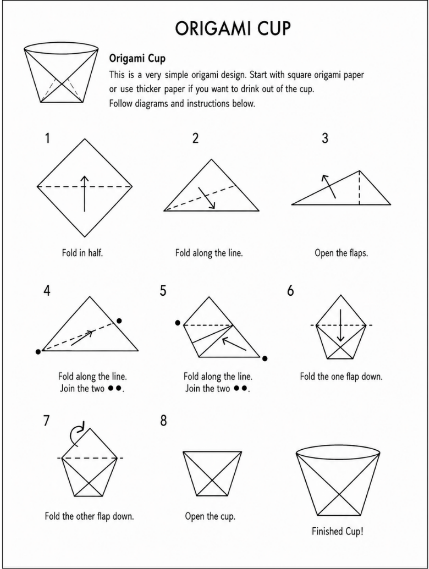
Art Activity - Origami Cup

The ‘Origami Activity’ teaches students how to fold an origami cup. This mindful art practice fosters patience and emotional awareness as students follow instructions. It also proves a practical example of “Neuroplasticity” – that the brain learns by experience.

Reflection Questions – Origami Cup:

  • What do you notice when you do this a second time?
  • Is it easier, more difficult or the same?

Learn More

Fun Facts

Fun Facts About the Eyes

  • More than 75% of the information we receive about the world around us consists of visual information.
  • There are six muscles that attach to the eye to move it.
  • Vision is by far the most used of the five senses. It is the main way we gather information from our surroundings.
  • Seeing requires about 50% of the brain to get involved.
  • Your eyes can process 36,000 bits of information every hour.
  • An eye has more than 2,000,000 working parts and the muscles that control your eyes are the most active. Rest your eyes!
  • The eye of a human can distinguish 500 shades of gray.

Fun but Critical Facts about The Brain

  • Your brain is the most complex object known in the universe
  • 3 (the head weighs around 8 lbs.)
  • 2% of the body’s weight uses about 20% of its energy
  • trillion cells, including 100 billion “gray matter” neurons always “on”
  • It’s an organ that learns from experiences through lifelong changes in its structure (neuroplasticity)

Videos to Watch

Resources

ResourceLearn_3

Learn More

ResourceActivities_4

Neuroscience Lesson Activities

ResourceArt_5

Art Activity

Web-based Resources

Videos to Watch

Web-Based Resources

Websites

How Meditation Changes the Brain Article

https://mindworks.org/blog/how-meditation-changes-the-brain/

Book Recommendations

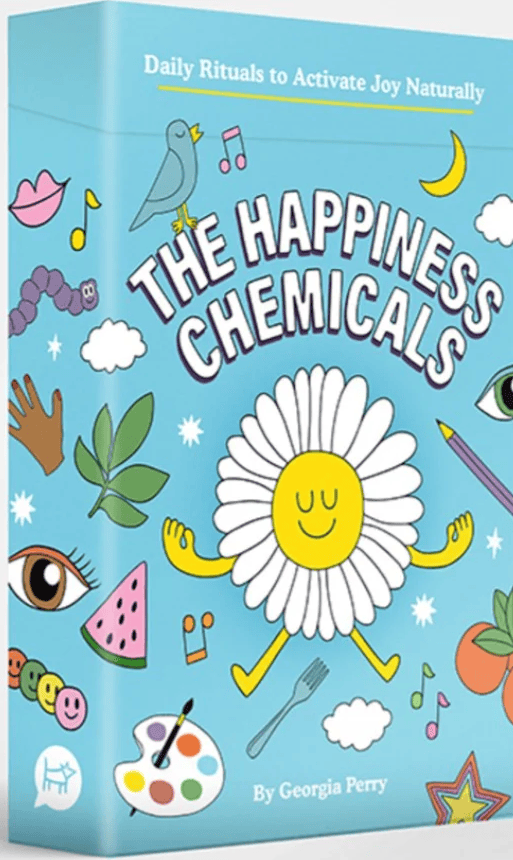
The Happiness Chemicals: Daily Rituals to Activate Joy is a vibrant deck of beautifully illustrated cards by Georgia Perry (@gpez) that will teach you how to stimulate your four happiness chemicals from within: dopamine, serotonin, endorphin and oxytocin. 

• Serotonin: the mood stabilizer
• Dopamine: the reward chemical
• Endorphin: the pain killer
• Oxytocin: the love hormone

The Happiness Chemicals Card Deck - Image