What is the Science of Happiness?

overview
- The science behind cultivating happiness; positive psychology research is investigating how certain practices, such as gratitude, appreciation, and self-reflection, can enhance our well-being.
- Specific gratitude, appreciation and kindness practices.
- Distinguishing short-term happiness from long-term happiness.
- The power of connection and relationship on happiness and well-being
Objectives
- What is kindness?
- What is true happiness?
- How to cultivate gratitude?
We Will Explore
- Exploring what makes us happy
Exploring how being kind affects us. - Experiencing gratitude, appreciation and kindness practices to promote happiness in self and others
Quote
Real and lasting happiness, the kind that remains, regardless of any change in external circumstances, can be cultivated.
Arriving Practice: Colouring to Music
Colouring to Music
Listen
Materials:
Coloured pencils, pens, markers, coluring pages or blank paper.
Instructions:
Take a few minutes to color or doodle, silently, listening to indigenous flute music.
Reflection Question
- How does this practice make you feel?
Check-in Practice - ABCD
ABCD
Listen
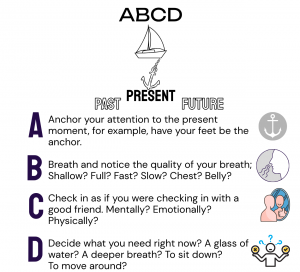
Checking in with yourself supports well-being by building self-awareness so you can take care of your needs and respond wisely.
This short practice can be done during your day, perhaps at times of transitions from one activity to another, to help you feel grounded and centered.
Benefits
- Stress Reduction: By intentionally pausing, you regulate your nervous system, lower your heart rate, and decrease cortisol levels to help prevent daily overwhelm.
- Heightened Self-Awareness: Tuning into your body’s physical sensations and your current state of mind builds interoceptive awareness.
- Making Wise Choices: Moving away from “autopilot” modes gives you the cognitive space to make deliberate, values-aligned choices for the remainder of your day.
- Enhanced Focus & Energy: Short mindfulness interventions prevent mental clutter from compounding, ensuring you maintain optimal energy and focus for your tasks.
Reflection Questions
- How do you feel after this practice?
How might you use this strategy in your life?
Healthy Habit
Self-compassion:
Practicing self-compassion allows us to hold ourselves in love and connection, giving ourselves the support and comfort needed to bear the pain, while providing the optimal conditions for growth and transformation.
Kindness:
When we do a good deed (or someone does one for us), our bodies release “feel good” hormones (serotonin and oxytocin) which reduces anxiety, calms us, and promotes
happiness.
Kindness
I’ve learned that people will forget what you said,
people will forget what you did,
but people will never forget how you made them feel.
~ Maya Angelou
“Kindness is the language which the deaf can hear and the blind can see.” ~ Mark Twain
“My religion is very simple. My religion is kindness.” ~ Dalai Lama
Mindful Attitudes

The Science of Happiness

Other Words for Happiness
Flourishing – Well-being –
Contented – Thriving
What Does Happiness Mean to You?
Reflection Questions:
- What impacts your sense of happiness – news, relationships, social media, life situations, health.
- Do you feel that you are in control of your happiness?
- Do you feel that events beyond your control determine your state of happiness? (people, events)
What Determines Happiness?
“Happiness means something different to each person.
It is not what someone else thinks you should be or have.
You must choose what it is to you and then create a plan for achieving it” ~ John Assaraf
well-being, combined with a sense that one’s life
is good, meaningful, and worthwhile.”
It is a process! ~ Sonja Lyubomirsky

21-Day Happiness Challenge

Implementing practices that foster optimism, gratitude, appreciation and connection can impact well-being. Research by the positive phycologist Shawn Anchor shows that you can make a positive impact on your experience of happiness with the 21-Day Challenge.
Intentional Breath Practice -
Comparing Box Breathing with 4-7-8 Breathing
Box Breathing
Watch
Box breathing is a simple, powerful stress-relief technique that calms the nervous system and improves focus. It consists of four equal steps: inhaling for 4 seconds, holding for 4 seconds, exhaling for 4 seconds, and holding again for 4 seconds. Repeat this pattern for 3 to 4 minutes to rapidly reduce anxiety.
Benefits
Box breathing, or square breathing, is a structured technique involving equal four-second intervals of inhaling, holding, exhaling, and holding again to shift the body from a “fight-or-flight” state to a calm, parasympathetic state.
4-7-8 Breathing
Watch
The 4-7-8 breathing technique is a popular, drug-free relaxation method developed by Dr. Andrew Weil. It involves inhaling for 4 seconds, holding the breath for 7 seconds, and exhaling for 8 seconds to lower heart rate, reduce anxiety, and promote restful sleep.
Benefits
- Balances mind & body
- Reduces stress & anxiety
- Can help you fall asleep
Reflection Questions –
Comparing Box Breathing & Box Breathing:
- Of the breaths we practiced, which one did you enjoy most?
- Not enjoying at all?
- Which breath helped calm the nervous system for you?
- When your attention wandered,
were you able to use either breath practice as an anchor for your attention?
Focus Practice - Recalling a Moment of Kindness
Kindness Practice
Listen
The “Recalling a Moment of Kindness” practice is a mindfulness exercise where you intentionally bring to mind a specific, past memory of being treated with warmth or compassion, or a time you showed kindness to someone else. By visualizing the event, you allow your brain to re-experience the emotional warmth and physiological benefits of the interaction.
It is a simple way to boost your mood, strengthen emotional resilience, and foster a more compassionate mindset.
Benefits:
- Stress Reduction: Reconnecting with feelings of warmth and care can lower levels of the stress hormone cortisol, dilate blood vessels, and decrease blood pressure.
- Brain Activation: Recalling these memories lights up the pleasure and reward centers of the brain, increasing natural mood-boosting neurotransmitters like serotonin and dopamine.
- Accessibility: Research indicates that simply recalling prosocial behaviors boosts your overall well-being just as much as actively performing them.
Reflection Question:
- Mindfulness is about caring and connection….
To yourself – mind – body – heart
To your community – family – friends
To the world – city – country
To the planet – environment - What was your experience of this practice?
- Was there a difference between having kind thoughts about a person in your life vs having kind thoughts about yourself?
Practicing Self-kindness
- Did you find it easier to direct kind thoughts to others rather than yourself?
Practicing Kindness
“Since kindness can be practiced, it is important to understand that its opposite attitude, meanness,
can also be practiced.
In fact, meanness is practiced quite a lot.
Most often, we aim it at ourselves.
We usually don’t fully recognize how mean we are to ourselves.
This meanness is a habit of thinking and feeling
that arises and is felt deeply in the body.” ~ Brantley, 2003.
Reflection Questions:
- How many acts of kindness did you count?
- What did you notice about the people who received an act of kindness? How do you think it made them feel?
- What did you notice about the people who passed on the act of kindness? How do you think it made them feel?
My Mindful Journey Reflection Journal
Complete the activities:
-
THE HAPPINESS 21-Day CHALLENGE Action Plan
-
Short-term & Long-term Happiness
-
Compliment Activity
-
Gratitude Activity
-
Golden Rule
The Wrap Up
Key Points About Happiness
- Happiness, kindness and gratitude are skills that can be cultivated.
Happiness can be cultivated by:
- Practicing Gratitude
- Practicing of Kindness
- Managing Stress
- Present Moment Awareness
- Intention Setting
- Cultivating Healthy Habits
- Practicing Mindful Attitudes
Final Reflection and Check -in
Final Check-in:
Check-in with what you are feeling right now.
Reflection Questions:
- What can you bring into your life that can increase your sense of happiness and well-being?
Resources

Happiness Lesson Activities

Art Activity

Learn More

Videos to Watch

Web-based Resources
Happiness Lesson Activities
Compliments
Once the compliments sheets have been created, have the participants post their complement sheets in areas where they may be picked up. Have them check the next day to see how many compliments were taken!
Benefits:
- Great practice to give your brain a break from being in front of a computer for a long time.
Fun Fact: 75% of the brain is used to process visualization.
- Thus, providing complete darkness for your eyes for a short time, can rest your brain and give you energy.
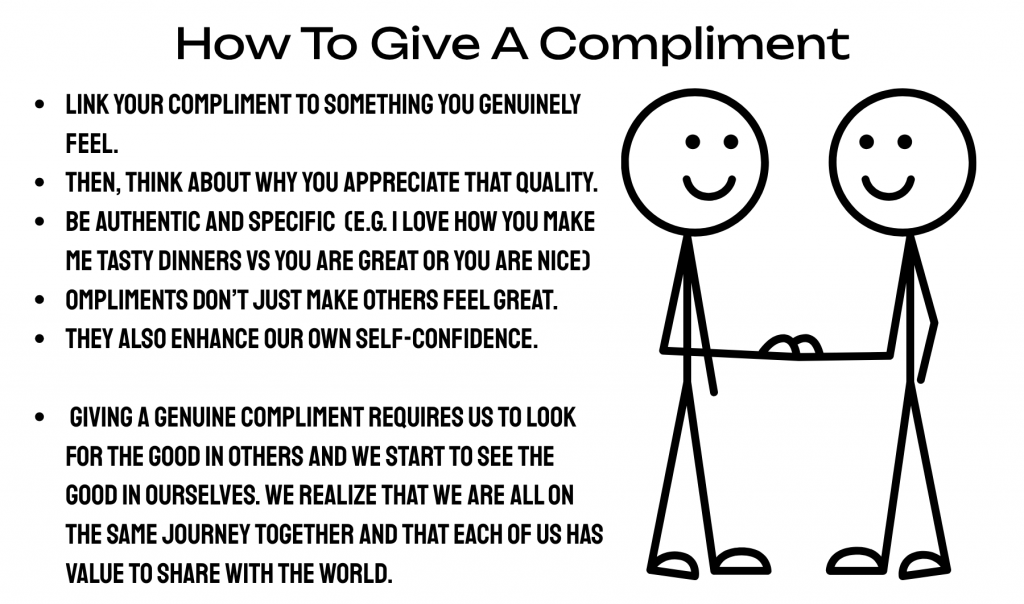
Compliment Activity
Download Here

Smiling
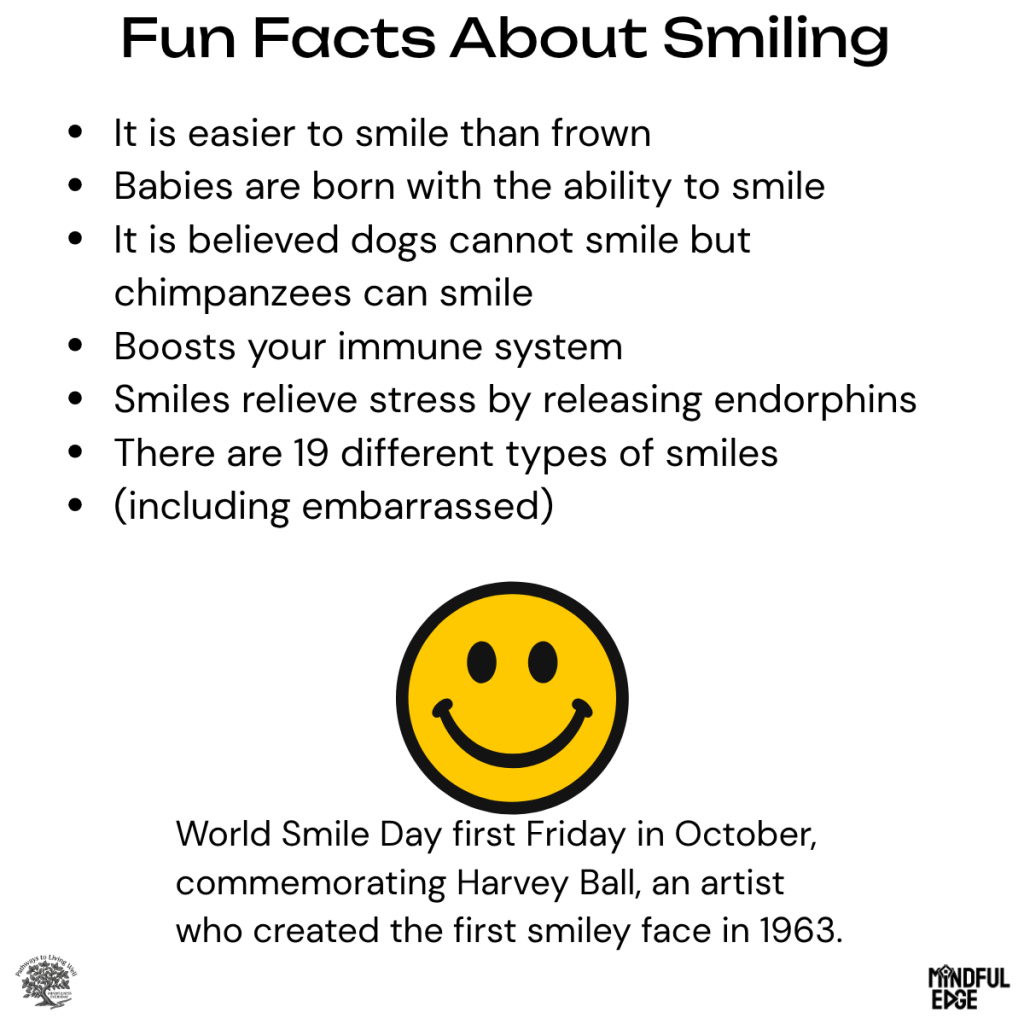
Consider Attitudes around Smiling
- What is your attitude towards smiling?
- How does gender play a role in our attitudes to smiling?
- What does our culture play a role in our attitude towards smiling?
The Smile Challenge:
Smiling might help you feel better, and it’s contagious
- How many smiles you get back in one day simply by smiling at others?
- Would you like to invite a friend to a smile contest and see who gets the most?
- Can you try smiling at someone you aren’t fond of or who you feel is not fond of you? (a teacher perhaps?) Maybe it will change your relationship with them!
Short-term & Long-term Happiness
Short-term happiness involves immediate, fleeting pleasures (like eating a favorite meal or buying an item). Long-term happiness is a sustained state of fulfillment built on purpose, resilience, and deep relationships. Balancing both—rather than sacrificing one for the other—is key to overall well-being.
Short-Term Happiness (Hedonia) is instant gratification driven by dopamine releases. It’s about feeling good now, e.g. eating junk food, scrolling on social media, or buying something new. It is short-lived and requires continuous stimulation, often leading to diminishing returns if relied upon exclusively.
Long-Term Happiness (Eudaimonia) is a deep sense of meaning, purpose, and life satisfaction. It is about living a life aligned with your core values, e.g. nurturing strong personal relationships, mastering a skill, or working toward a meaningful career goal. It requires hard work, patience, and delayed gratification.
Striking the Balance: Psychological research suggests that it does not have to be an “either/or” scenario. You can enjoy short-term pleasures while keeping your long-term goals in sight.
Reflection Questions:
- What 3 things give you short-term happiness?
- What 3 things give you long-term happiness?
Gratitude 7-Day Challenge Activity
- Write 3 different things every day, that you are grateful for.
- See how you feel at the end of the 7-day experiment.
Research shows that 21 days creates a change in the brain.
Benefits:
- Gratitude unshackles us from toxic emotions: it’s hard to be angry and grateful at the same time.
- Gratitude helps even if you don’t share it: the mere act of writing the letter can help you appreciate the people in your life and shift your focus away from negative feelings and thoughts.
- Gratitude’s’ Benefits Take Time: Be patient and remember that the benefits of gratitude might take time to kick in.
- Gratitude has lasting effects on the brain: Gratitude reverses our priorities to help us appreciate the people and things we do.
Art Activity
LIFESCAPE PROJECT ~ WHO AM I?
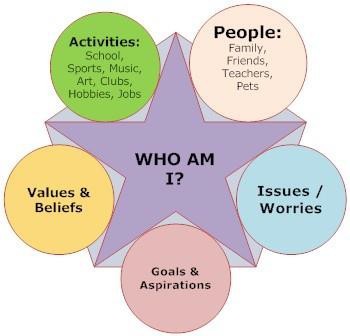
See if you can show the following 6 aspects using pictures and /or captions:
- The people in your life: family, friends, teachers, pets
- The activities you are involved in: school, time with family & friends, sports, music, arts, clubs, hobbies, jobs and the places in your life that
- Values and beliefs
- Goals/Aspirations
- Issues/Worries
- Mindful Leadership Qualities
Your Lifescape can illustrate the aspects of your life that potentially impact your physical, social and emotional well-being and happiness; using headings, sub-headings, & captions to explain pictures where needed, drawing from your personal experience.
Ikagai
What gets you out of bed in the morning? According to the Japanese, everyone has what is known as an Ikigai. The term is composed of two Japanese words: iki referring to life, and kai, which roughly means “the realization of what one expects and hopes for”. Or what the Japanese call “a reason for being”. Understanding what you love and what you’re good at leads you to passion.
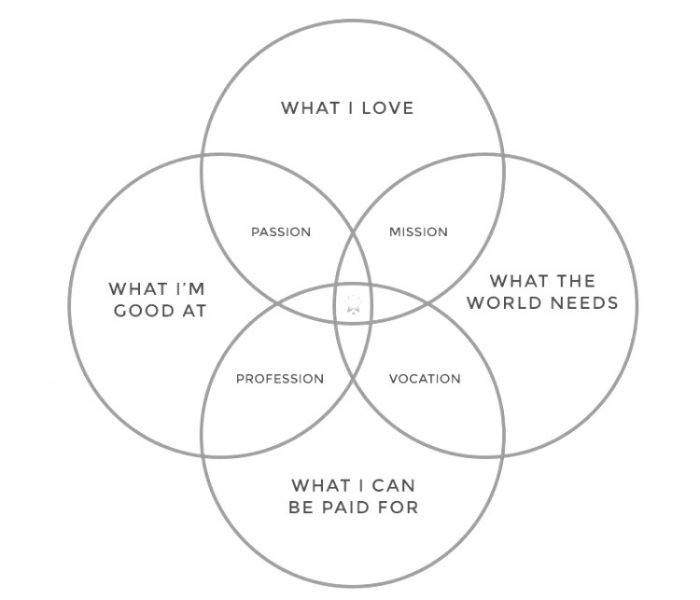
Ikigai can be achieved by answering four distinct questions.
- What do you love? (your passion)
- What does the world need? (your mission)
- What are you good at? (your vocation)
- What can you be paid for? (your profession)
Knowing the answer to these questions allows you to understand your meaning to life. Understanding what you love and what you’re good at leads you to passion. On the other hand, finding what the world needs and what you can be paid for identifies your vocation.
Learn More
The Golden Rule
The Golden Rule is found in many different beliefs and traditions, showing that people from all backgrounds share similar values. It encourages us to remember that we’re all connected and that our choices can make a difference—not just for our friends and family, but for our schools, communities, and the world around us.
The Golden Rule (Ethic of Reciprocity)
The Golden Rule is a simple idea that has been shared by cultures and religions around the world for thousands of years:
Treat others the way you would like to be treated.
It reminds us to think about how our words and actions affect other people. When we show kindness, respect, fairness, and empathy, we’re more likely to build positive relationships and create a supportive community.
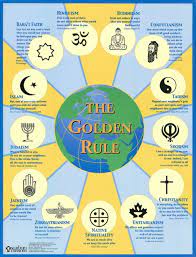
In everyday life, the Golden Rule means:
- Be kind and respectful.
- Listen to understand, not just to respond.
- Think before you act.
- Show empathy, even when someone is different from you.
- Small acts of kindness can havea big impact.
- Treat everyone with fairness and compassion.
Reflection Question:
- What is your “Golden Rule”?
Videos to Watch
Web-Based Resources
Websites
Understanding the Golden Rule
https://frasercentre.ca/sm-archive/www.scarboromissions.ca/golden-rule/understanding-the-golden-rule