How Do Thoughts Impact Experience?

overview

  • What is the nature of thought?
  • How can we view thoughts in a way that is helpful, not harmful?
  • How can we practice not being trapped by negative thoughts about ourselves?
  • Cultivating mindful self-compassion as a means to manage negative self-talk.
  • Exploring thinking, including the impacts of perception, implicit bias, and cognitive distortions.

Objectives

  • Thoughts are just thoughts
  • You don’t have to believe everything you think.
  • To understand the effects of mind chatter on attention and performance
  • To experience the difference between negative self-talk and positive self-talk.

Quote

Human Beings are natural time travelers –caught by regrets of the past and worries about the future, pulling us away from the present moment, the moment that is happening right now.

Our minds constantly chatter – monkey mind. We are more than our thoughts.
We can work with the thoughts seeing them like clouds or weather in the sky, noticing that they come and they go.

We Will Explore

  • How can I practice not being trapped by negative thoughts about myself?

  • What is the nature of thought?

  • How can I view thoughts as in a way that is helpful, not harmful?

Arriving Practice

Listening to the Bell

Listen

Mindful listening to a bell anchors you entirely in the present can release physical tension, soothing the nervous system, and provides a soothing anchor for wandering thoughts, training your brain to focus on the “here and now”.

Check-in Practice

Triangle of Awareness

Listen

Physical sensations of any experience (pleasant or unpleasant) can be separated from the thoughts and emotions about the experience. The Triangle of Awareness is about learning to separate and distinguish what is being felt in the body from what is being thought in the mind, and to separate and distinguish thoughts from emotions (feelings and moods). With practice, you will learn to experience the three components of the triangle as distinct.

The invitation is to be with things as they are, without trying to change them.

Perception - Seeing the Big Picture

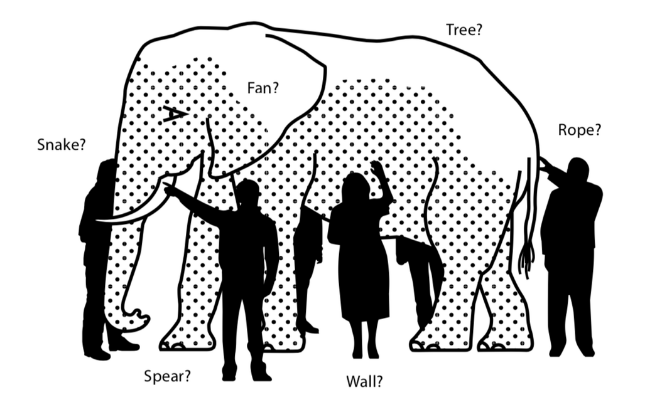
Blind Men and the Elephant

Blind Men and the Elephant” story is about six blind men encountering an elephant for the first time. Each man touches a different part of the elephant (trunk, leg, side, ear, tusk, tail) and, based on their limited experience, describes the elephant in completely different, and often conflicting, ways.

The story highlights how limited perspectives can lead to misunderstandings and the importance of considering multiple viewpoints to understand a complex situation.

Reflection Question – Limited Perspectives:

  • Have you ever had an experience where you concluded not having all the facts or being in a bad mood or stressed out short on time that caused you to come to a wrong conclusion?
  • Or have a negative reaction?

Don’t Believe Everything You Think

If you’re stuck in a negative thought, ask yourself?

1. Is it True?

Often the answer is, “Well, yes.” 
This is the brain initially reacting – the autopilot you live with and believe is you.

2. Is it Absolutely True?

Is this thought 100% accurate?
Can you see the thought in a different way?

3. Is it Absolutely True?

Notice any storylines you’re holding onto, and name your feelings: sad, angry, jealous, hurt.

4. How would things be if you could let go of the thought?

Imagine possible benefits to your relationships, energy levels, and motivation.

Thought Influencers

ThoughtsImage2

Implicit Bias

a form of bias that occurs automatically and unintentionally, that nevertheless affects judgements, decisions, and behaviors.

ThoughtsImage3

Cognitive Dissonance

a mental conflict that occurs when your beliefs don’t line up with your actions.

ThoughtsImage4

Cognitive Distortions

internal mental filters or biases that increase our misery, fuel our anxiety, and make us feel bad about ourselves.

ThoughtsImage10

Unconscious Bias

social stereotypes about certain groups of people that individuals from outside their own conscious awareness.

ThoughtsImage9

Culture, Gender and Families

Consider: 
How your gender, culture, and family upbringing might have impacted how you think?

Self-talk and Negativity Bias

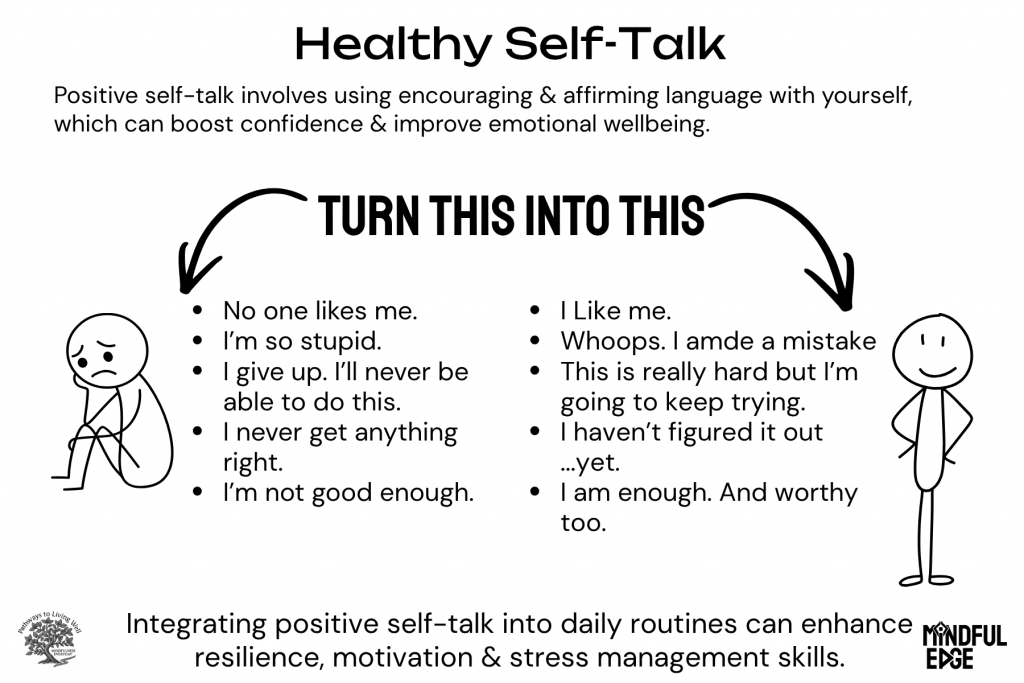
Our self-talk profoundly affects how we view ourselves and our environment. It’s easy to get into patterns of negative self-talk that limit us and keep us from reaching our goals. But by contrast, positive self-talk encourages us to take risks and strive for success.

Negativity Bias refers to our tendency as humans to pay more attention to remember and be affected by negative events or experiences compared to positive ones. It’s a mental (cognitive) bias that influences our thoughts, emotions and decision-making.

Reflective Question

  • Why do negative events, experiences or information overpower positive ones?

  • What strategies could you use to conteract negativity bias?

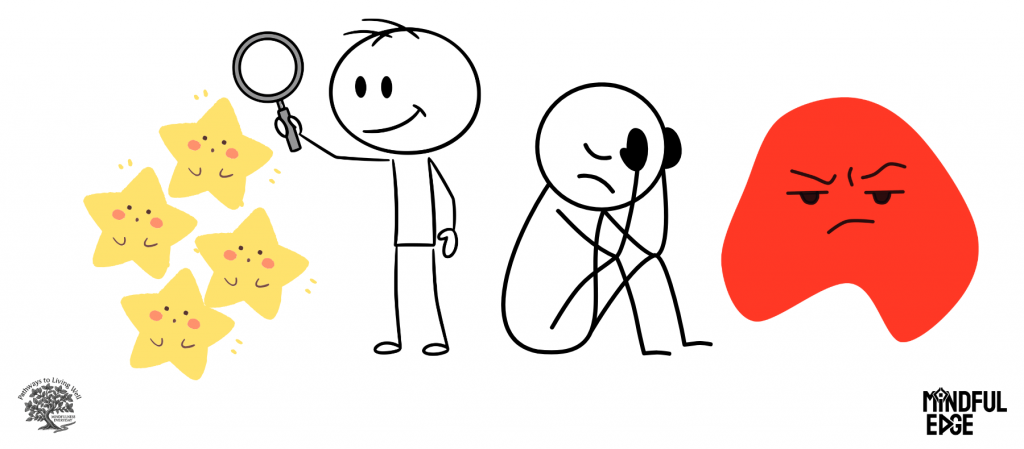
Self-Assessment - Self-Criticism - Self-Compassion

ThoughtsImage_Self-Assessment

Self-Assessment

Objectively look at areas for improvement with a kind, hopeful and patient attitude to motivate us to get the desired outcome.

.

ThoughtsImage_Self-Criticism

Self-Criticism

Subjectively look at areas for improvement impatiently, judgmentally and with a sense of “I’m lacking” (that can sometimes become so unkind and demoralizing that we give are paralyzed into in-action).

ThoughtsImage_Self-Compassion

Self-Compassion

After Self-assessing, we give ourselves support and encouragement rather than being cold and judgmental.

Intentional Breath Practice - Comparing 2

Breath Awareness

Listen

Circle Breathing

Listen

Breath Awareness is a powerful practice to ground yourself in the present moment. By simply observing your natural breath, you can quickly activate your body’s parasympathetic (rest-and-digest) nervous system. This practice significantly reduces stress, lowers your heart rate, and stabilizes blood pressure.

Benefits: 

The benefits of cultivating a daily breathing awareness practice span your physical, mental, and emotional health.

Reflection Questions

  • How many of you were able to keep your attention on the breath for that long (about a minute)?
  • How many found their attention wandering?
  • How many notice a shift regardless of whether your attention wandered or not?
  • How do you feel right now?

Welcome to being a human being!

Circle Breathing is an easy self-regulation tool that helps calm the body and refocus the mind during feelings of panic, stress, overwhelm, and worry. Practicing Circle Breathing before bed may even help you sleep.

This practice is beneficial in aiding hyperventilation and/or panic attacks as it helps the lungs regain a controlled, rhythmic breathing pattern.

Benefit:

The primary benefit of circle breathing is its ability to quickly relieve anxiety and reset the nervous system by combining visualization with intentional breathing, a continuous loop of inhalation and exhalation without pausing between breaths.

  • Which practice allowed you to keep your attention most easily? Breath awareness or circle breathing?

The reason why:

Attention is like a pipeline. If you can fill it up with an object to keep your attention focused, then thoughts do not spill out into ruminating about the past or the future.

Circle breathing uses 2 anchors for attention – the breath and visualization. For many, the breath is too subtle to hold the attention. We will be exploring more options in the following lessons. 

Mindful Movement Practice

Chair Flow with Eagle Arms

Watch

This gentle mindful movement flow can be done seated in a chair and helps release tension in the body.

Reflection Questions

  • Does one side feel different than the other? 
  • Which side is tighter/looser?
  • Do you carry a lot of tension in your shoulders?

Mindful Attitude - Letting Go

Mindful Attitude - Letting Go

“Letting go gives us freedom, and freedom is the only condition for happiness.” ~Thich Nhat Hanh

Healthy Habits - Play & Rest

Play Time

When we allow ourselves to be spontaneous or creative, playfully enjoying fun and novel experiences, we help make new connections in the brain.

Rest – Down Time

When we are non-focused, without any specific goal, and let our mind wander or simply relax, we help the brain rest and recharge.

Focus Practice

Thought Watching

Listen

Reflection Questions

  • Did you find this a soothing experience?
  • Did you experience restlessness or frustration or impatience?
  • Were you able to see thoughts, emotions, and physical sensations more objectively?

My Mindful Journey Reflective Journal

Complete the activities:

  • Don’t Believe Everything You Think

  • Fact Checking Thoughts

  • Counteracting the Unkind Mind – The Inner Critic

  • Self-Assessment – Self-Criticism – Self-Compassion

  • Thought Party Activity

Download Printable PDF Here

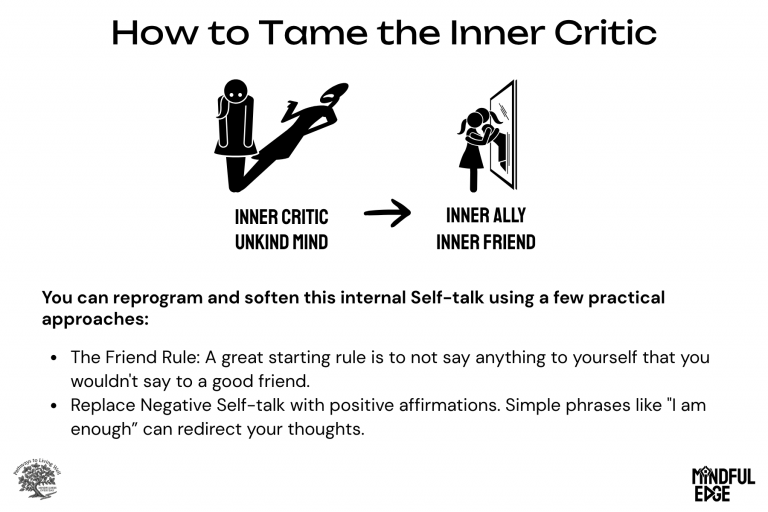
Taming the Inner Critic – The Unkind Mind

Since kindness can be practiced, it is important to understand its opposite attitude, meanness can also be practiced.

Meanness is practiced quite a lot. Most often we aim it at ourselves. We usually don’t realize how mean we are to ourselves. This meanness is a habit of thinking and feeling that arises often and is felt deeply in the body.

Meanness expresses itself in critical tones and self-statements. You might tell yourself, “I’m such a jerk,” or “I’m so stupid” or “I always mess up.” Most of the time you probably do not even notice these thoughts and how they could be affecting your body and feelings.

When this meanness happens in you, you become your own worse stressor. No matter how bad the situation is, your mean attitude can become stronger and can add to your misery.

Of course, meanness also lashes out at others.

Let’s look at a scenario.

You are on the basketball team, and it’s in the final play of the game. You are the one chosen to take the final foul shot. It’s all up to you. If you make it, your team wins; if you don’t make it, your team loses.

You take the shot….and miss.

We are often so unkind to ourselves. If we treated our friends like we treat ourselves, we might not have any friends. We call this negative self-talk, the unkind mind.

Reflection Questions

  • What are some of the things that you might say to yourself?
  • How does it make you feel?
  • What would happen if it was your best friend who had missed the shot? What are some of the things that you would say to him or her?
  • What do you think are some of the ways that you can counteract the effects?

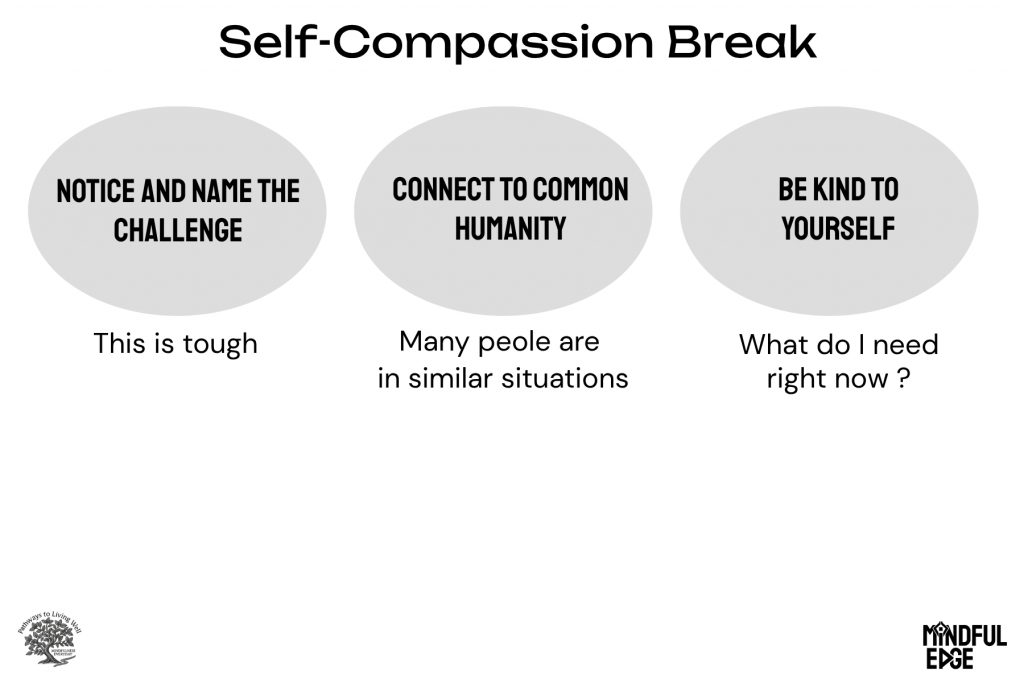
Self-Compassion Break

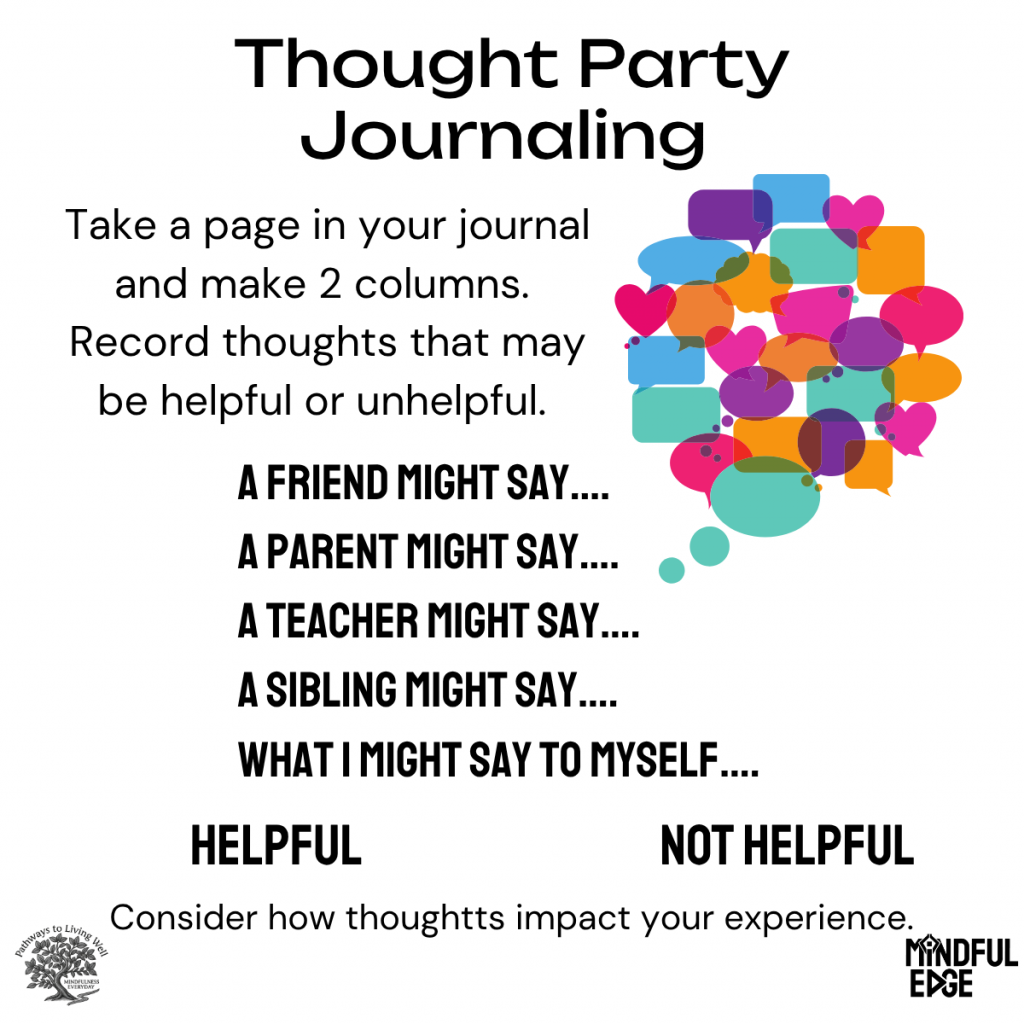
Thought Party Journalling Activity

This is a reflective activity that demonstrates the internal dialogue that often is running through our minds. It has been shown to negatively impact our ability to accomplish what we need to finish. This process shines the light on different aspects of our inner “thought party.”

Reflection Questions – Journal Activity: 

  • Do we ever have a teacher’s voice in our heads saying something critical? A parent’s voice? A sibling’s voice? A voice from the future?
  • What are some negative thoughts that you might have when faced with challenges?
  • Are these thoughts helpful?

Remember, you can make the choice
to replace an unhelpful thought with a helpful thought.

Thought Party Journaling Activity Graphic

Let’s do a simple writing activity that examines this tendency that many of us have.

Create a 3-column table like this one and write your own messages.
Fill in your own phrases that are meaningful to you. 

People might say

Not Helpful Messages
(Suggestions)

Helpful Messages 
(Suggestions)

Teacher

“there will be no makeup test”

“you got this; you have worked hard to prepare”

Parent

“you need to up your grades to get into uni”

“just do the best you can, that is enough.”

Sibling

“it’s not a big deal whether you do well or not”

“I admire the way you prepare for things”

Friend

“why are you always studying?

“I miss hanging out with you.”

Self

“I hate math”

”I can do this”

The Wrap-Up

Key Points About Thoughts

  • Thoughts are just thoughts.
  • You don’t have to believe everything you think.
  • Mind chatter can have an impact on on attention and performance.
  • There is a difference between negative self-talk and positive self- talk. 

Final Check-in & Reflection

Reflection Questions – Thoughts

  • Was there a shift in how you feel after doing this lesson, learning about stress and doing the activities and practices?
  • What information or activities in this lesson did you find most helpful in your own life? 

Explore

ResourceActivities_4

Thought Lesson Activities

ResourceArt_5

Art Activity

ResourceLearn_3

Learn More

Videos to Watch

Web-based Resources

Thought Lesson Activities

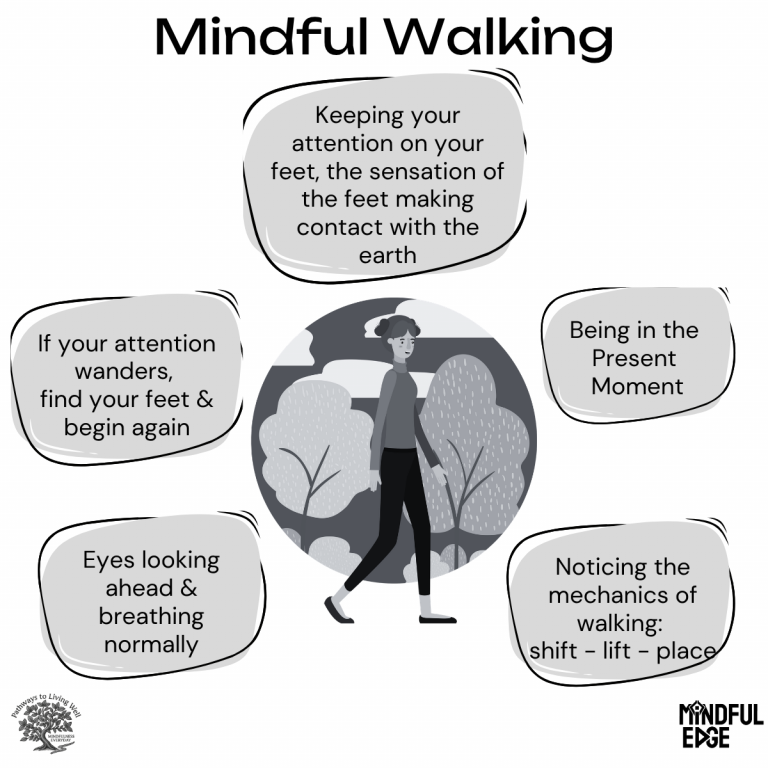
Focus Practice - Mindful Walking

Mindful walking is a restorative mindful movement practice. By focusing on the experience of walking, the sensation of the feet making contact with the earth, and the mechanics of walking, in the present moment, it effectively reduces stress, and enhances your mood. It can be challenging at first, since we usually rush from one place to another, and the thoughts in our mind often moving just as fast. Walking with mindful attention can inhibit negative rumination, and reduce stress.

Reflection Questions – Mindful Walking:

  • What did you notice while practicing mindful walking?
  • Were you able to keep your attention on your feet while walking or did your attnetion take a wlk of its own?
  • When you noticed your attention wandering were you able to bring it back to the practice?
  • How did you feel after doing the practice – calm, relaxed, irritated, frustrated or something else?
  • Could you find a time in your day to include this practice?


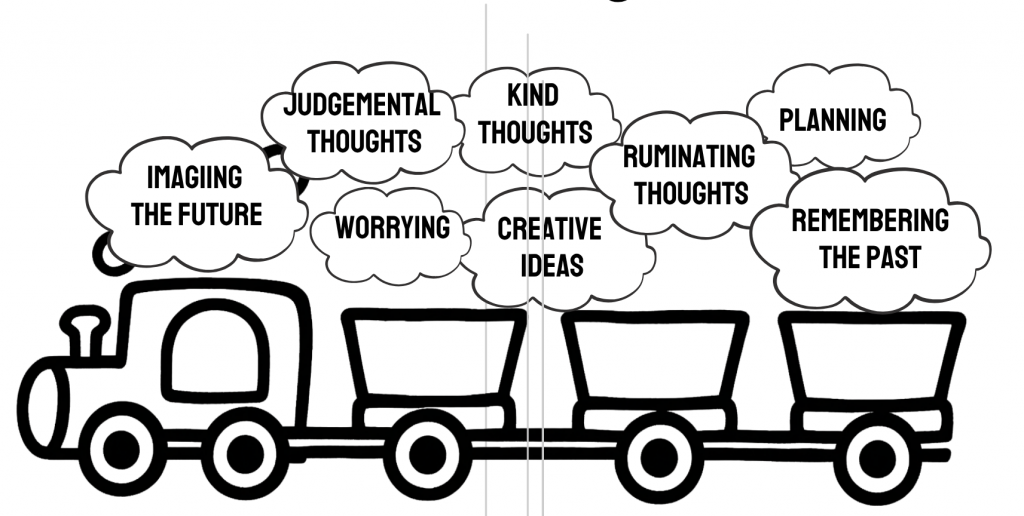
Art Activity - Train of Thoughts

Learning to observe your thoughts as they arise – without adding to them or trying to push them away – can reduce your stress.

This short practice, about 5 minutes, involves using your imagination to watch thoughts as if they were cars in a train passing by, and then drawing a train, and noting your thoughts.

Reflection Questions – Train of Thoughts Art Activity:

  • Did you find this a soothing experience?
  • Did you experience restlessness or frustration or impatience?
  • Were you able to see thoughts more objectively?
  • …and that “I am not my thoughts.”
  • …they are part of me, but they are not ME

Learn More

Positive Thinking & Stress Management

Positive thinking doesn’t mean ignoring challenges but approaching them with optimism and constructive self-talk. Optimism is linked to lower stress, better coping skills, and numerous health benefits, such as reduced risk of depression, heart disease, and other illnesses.

Key Points:

  • Self-talk matters: Thoughts can be positive or negative. Negative self-talk often leads to pessimism and stress.
  • Health benefits: Positive thinking is associated with longer life span, better physical and mental health, lower distress, and healthier lifestyle choices.
  • Common negative thinking patterns: Filtering, personalizing, catastrophizing, blaming, perfectionism, and polarizing.
  • Shifting to positive thinking:
    Identify areas for change
    Reframe negative thoughts
    Use humor
    Live a healthy lifestyle (exercise, diet, sleep, stress management)
    Surround yourself with supportive people
    Practice kind, encouraging self-talk

Examples:

“I’ve never done it before” → “It’s an opportunity to learn.”

“It’s too complicated” → “I’ll try a different approach.”

“There’s no way it will work” → “I can try to make it work.”

Takeaway:

With practice, positive thinking becomes a habit, leading to greater resilience, less stress, and improved well-being.

(https://www.mayoclinic.org/healthy-lifestyle/stress-management/in-depth/positive-thinking/art-20043950)

Videos to Watch