We Will Explore:
We can practice mindfulness by paying attention to our present moment experience by connecting to our bodies, minds and emotions. ~ Heidi Bornstein
Watch
Decades of scientific research on breathing suggest that, when we relax, lengthen, and slow our breathing, we can unwind the tension in our nervous system that creates anxiety and irritation. In one recent study, researchers found that slow diaphragmatic breathing (belly breathing) led to enhanced mood, increased focus, and significantly lower levels of the stress hormone cortisol.
How can you bring slow deep breathing into your daily life? Notice those moments when you get triggered. Use these moments as a cue to slow down your breathing. Then, bring your attention to where you’re breathing. See if you sense the subtle rising and falling of your abdomen with each inhale and exhale.
This breathing technique may also be used as a self-regulating tool for grounding in times of overwhelm, anxiety, worry, and discomfort.

Listen
The first Mindfulness practice is stopping and noticing what is happening inside you.
The Triangle of Awareness illustrates the interconnected relationship between our thoughts, emotions (feelings), and body sensations. All three of these elements contribute to an overall sense of awareness of our present moment experience. The triangle of awareness is the foundation of the pause practice.
What we ask ourselves is: What thoughts, emotions, and body sensations are currently present?
In the mindfulness lesson, we practiced choosing an anchor for your attention that works best for you – body sensations, breath or sound.
In this lesson, remember your “go to place” if you get overwhelmed.
Healthy eating provides the sustained energy we need to be physically active. It helps us manage stress, relax, and supports good coping skills.
When we move our bodies, aerobically if possible, we strengthen the brain in many ways.
Watch
The Circle of Joy is in a balancing flow – If you are feeling tired, it can help give you energy. If you are feeling wired, it can help get rid of excess energy.
.
Listen
Mindful Eating is a foundational mindfulness practice that allows us to use our innate power of focus and attention to examine our internal experience and notice how rich it is when we employ the attitudes of curiosity and interest, non-judgment, beginner’s mind and patience.
All life depends on the relationship between
sun, water, air, plants and animals
~Wilhelm Reich Institut
Which ones do you already practice?
Which one would you like to?
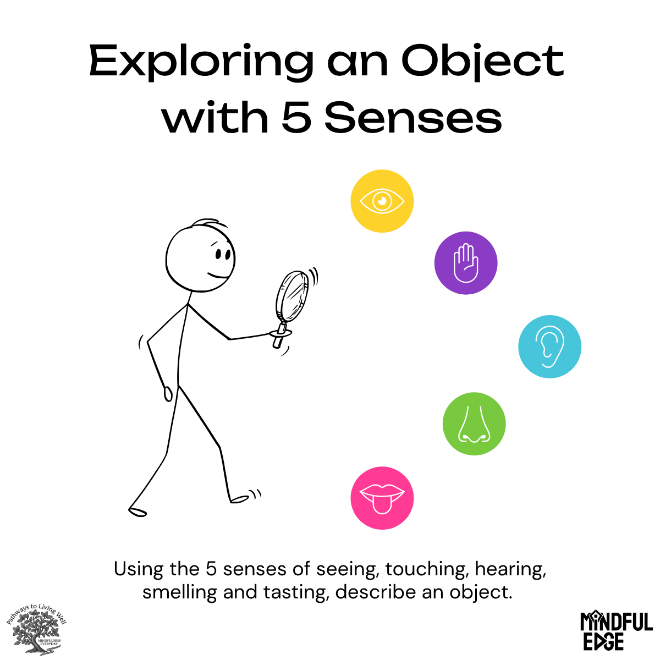
This is an alternative activity to mindful eating, investigating using the senses to practice present–moment awareness and noticing how it affects our experience. It involves bringing your attention to focus on a single object and describing the object based on your five senses, as if to someone who can’t see it.
Listen
This is a formal mindfulness practice that gently guides you on a journey through your body, beginning at the tips of your toes and moving all the way to the top of your head. It can be done lying on the floor, on a mat, or seated in a chair.
The purpose of this practice is to help you become more aware of physical sensations, thoughts, and emotions in the present moment.
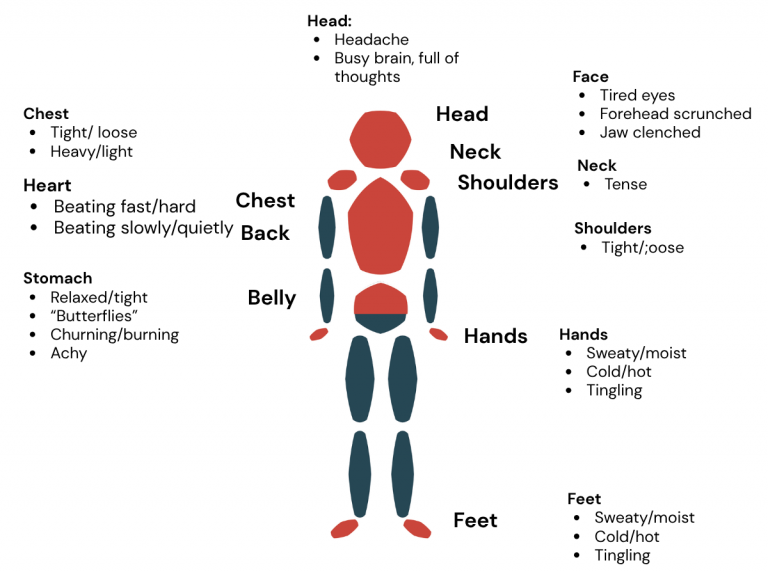
It’s helpful to be able to name sensations in the body that you may notice during the practice.
Take a look a this diagram and see if any of the sensations are familiar to you.
The Yoga Nidra Body Scan is the process of scanning the body from the feet to the top of the head. The intention is to focus attention on different parts of the body with an attitude of kind curiosity and non-judgment. The pace is quick, allowing you to notice the mobility of your awareness.
Complete the activities in My Mindful Journey Reflection Journal:
MINDFULNESS in DAILY LIFE: Noticing the Little Things
Mindful Attitude Activity Self-Quiz
What do you notice while practing mindfulness?
Web-based Resources
Videos to Watch
Learn More
Practicing Mindfulness Lesson Activities
Art Activity
This is an alternative activity to mindful eating, investigating using the senses to practice present–moment awareness and noticing how it affects our experience. It involves bringing your attention to focus on a single object and describing the object based on your five senses, as if to someone who can’t see it.
Without touching the object, first, explore it visually. Describe what you see in ways that refer to the inherent qualities of the object, not judgments of interpretations. “Small,” for example, is a judgment, while “about one inch in diameter” is a more objective description. You might imagine that you are describing the object to someone who cannot see it.
The Yoga Nidra Body Scan is the process of scanning the body from the feet to the top of the head. The intention is to focus attention on different parts of the body with an attitude of kind curiosity and non-judgment. The pace is quick, allowing you to notice the mobility of your awareness.
Listen