Frame 220

PRACTICE

How to Practice Mindfulness

OVERVIEW

  • Mindfulness is a particular way of paying attention, which can increase calmness, balance, and inner strength.
  • Mindfulness helps us manage stress.
  • We can begin to practice mindfulness by paying attention to the breath and connecting to our bodies.
  • How we perceive situations and events creates our own reality. Our perception of a situation is subjective and may or may not be accurate.

We Will Explore

  1. How to practice mindfulness?
  2. How to use body and breath as a focus for attention?
  3. How to practice mindfulness in daily life?

Objectives

  1. Learning how to increase focus and attention
  2. Reinforcing the body-mind connection 
  3. Experiencing mindfulness through direct experience
  4. A life strategy that increases wellness in daily li

Mindful Check-in

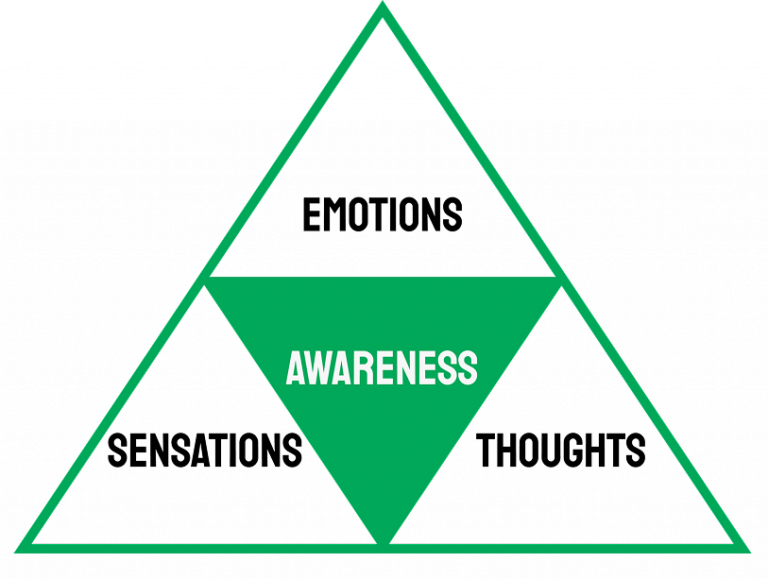
PAUSE Practice & Triangle of Awareness

instructions

Imagine your attention is a flashlight; shine the light of attention on the triangle of awareness.
Close your eyes, if that is comfortable for you.

Now look inside.

  • What is your body telling you?
  • What thoughts are there?
  • What feelings or emotions  too?

Take a breath or two or four,  do nothing less, do nothing more  
Then take another look inside and give a name to what you find. 

How do you feel in the body?

Expanding your feeling vocabulary

Practicing Mindfulness Safely

In the mindfulness lesson, we practiced choosing an anchor. 

In this lesson, we will explore Finding your “go to place” if you get overwhelmed.

Possible Reactions to Mindfulness Practice

  • Mindfulness is a particular way of paying attention, which can increase calmness, balance, and inner strength.
  • Mindfulness helps us manage stress.
  • We can begin to practice mindfulness by paying attention to the breath and connecting to our bodies.
  • How we perceive situations and events creates our own reality. Our perception of a situation is subjective and may or may not be accurate.

Anchors for Attention

  • The breath is not the only option for focusing attention.
  • For some people, focusing on the breath may feel uncomfortable, especially if they’ve experienced trauma or have breathing conditions like asthma.
  • Other anchors can be used instead (like sounds, body sensations, or objects).
  • You can always choose the anchor that feels safe and supportive for you.

Benefits

  • Grounding is a technique that helps keep someone in the present. It helps reorient a person to the here-and-now and in reality.
  • Grounding skills can be helpful in managing overwhelming feelings or intense anxiety and help someone to regain their mental focus from an often intensely emotional state.

Healthy Habits - Move & Reflect

Move – Physical Time:
When we move our bodies, aerobically if possible, we strengthen the brain in many ways.

Reflect – Time In: When we quietly reflect internally, focusing on sensations, images, feelings and thoughts, we become more aware of the impact of situations on us and we make better choices.

Mindful Attitudes

Trust

“Trusting your own authority” means believing in your own judgement, intuition and inner wisdom when making decisions, rather than relying solely on external sources of the opinion of others. It involves recognizing your own strengths, knowledge, experiences and using them to guide your actions.

An invitation to trust in your intuition and your own authority, even if you make some mistakes.

Non-striving

Mindful non-striving is a core principle of mindfulness that encourages letting go of the urge to control or change things and instead, accepting the present moment as it is. It involves cultivating a sense of ease and allowing things to unfold naturally, rather than constantly pushing for a desired outcome.

Mindfulness invites us to BE more by DOING less, opening to a new way of seeing ourselves. While engaging in practice, trying less, and simply experiencing the moment. 

Comparing Awareness of Breathing and 5-Finger Breathing

instructions

  • Which practice allowed you to keep your attention most easily? Using the Breath as an anchor or the 5-finger?

The reason why:

Attention is like a pipeline. If you can fill it with an object to keep your attention focused, then thoughts do not spill out into ruminating about the past and the future.
5-finger breathing uses 2 anchors for attention – the breath and somatic touch. 
For many, the breath is too subtle to hold the attention. 

The Calm for Your Storm

circle of joy

Benefits

  • The Circle of Joy is a Balancing Flow
  • It can give you energy when you are tired
  • Chill you out when you are wired
  • If you know you have a day ahead sitting at a desk, try this in the morning. If you have trouble sleeping, try this before you go to bed.

Mindful Movement Debrief

  • Did you find yourself focused? Unfocused?
  • Pleasant? Interesting? Or Unpleasant? Frustrating?
  • What did you notice? Physically? Mentally? Emotionally?
  • Did anything surprise you / challenge you?

15-Minute Body Scan Focus Practice

Can be done lying down or seated in a chair

Mindful Movement Debrief

It’s helpful to be able to name sensations in the body that you may notice during the practice.
Take a look at this diagram and see if any of the sensations are familiar to you. 

Body Sensations You May Notice

Take a look at this chart and see if you noticed any of the sensations while doing the practice. 

Physical sensations you might notice

  • tingly
  • burning
  • pounding
  • throbbing
  • trembling
  • light/heavy
  • tight/loose
  • shooting
  • stinging
  • airy
  • cutting
  • tense/relaxed
  • soft/rough
  • prickly
  • pulling
  • burning
  • vibrating
  • cool/warm
  • stiff/flexible
  • numb
  • achy
  • sinking
  • clammy/dry
  • airy/dense
  • shaky
  • itchy
  • pulsing
  • dull/sharp

Physical sensations you might notice

  • impatience/wanting to stop
  • neutral
  • enjoyment/wanting to continue
  • release
  • joy
  • sadness
  • fear
  • grief
  • pride
  • disgust
  • surprise
  • anger
  • frustration
  • anticipation
  • shame

Thoughts that may occur

  • Circular thinking
  • Wishing/hoping/comparing
  • Labeling/cataloguing
  • Judging your experience
  • Reviewing the past
  • Imagining the future
  • Thinking about others
  • Planning
  • Evaluating/analyzing

Body Scan Debrief

  • Did the practice seem short? or long?
  • Pleasant? Or unpleasant?
  • Did you experience restlessness?
  • What did you notice? Physically? Mentally? Emotionally?
  • Did anything surprise or challenge you

“All life depends on the relationship between sun, water, air, plants and animals.”

Reflection Questions

  • Did you get impatient?
  • Were you able to keep their attention on the instructions and the practice, or did you notice your attention wandering? 
  • What did you like or dislike about the experience? Did anything surprise you?
  • Is this how we normally eat?
  • Anything else you noticed about eating like this? 
  • Can you see yourself eating the first bite of food more mindfully after this practice?
  • What thoughts come up about fruit or food in general?

Mindful Eating Practice Tips

  • Consider the Source of your food
  • Take your time eating
  • Drink water
  • Sit at a table
  • Turn off your cell phone
  • Question the nutritional content of what you are eating
  • Appreciate what you are eating and the company that you are with. 
  • Enjoy the experience

Mindful Eating Questions

  • Which ones do you already practice?
  • Which one would you like to?

Mindful Eating Video

Wrap Up

Key Points about Practicing Mindfulness

  • Knowing what is happening in your body can be an “early warning system” and help you choose helpful ways of managing stress and being with the ups and downs of life.
  • Strategies that include mindful practices, healthy habits, and attitudes support well-being

Final Check-in and Reflection

reflection questions

consider

  • How do you feel now?
  • Was there a shift in how you feel after doing this lesson, doing the activities and practices?
  • What practices resonated with you?

final video

EXPLORE MORE

Mindfulness for Teens: Free Downloadable Practices

https://www.mindfulnessforteens.com/guided-meditations