Mindfulness is a skill that we can cultivate to enhance our ability to be with the ups and downs of life by building our own personal Tool Kit to manage our lives more effectively.
We will Explore:
“Mindfulness means moment-to-moment, non-judgmental awareness.
It is cultivated by refining our capacity to pay attention, intentionally, in the present moment.” ~ Jon Kabat-Zinn
Attention is like a muscle – it can be trained to develop focus and concentration.
The 5-senses “arriving” or grounding practice is a mindfulness technique used to anchor you in the present moment.
Benefits:
Can you give one word (or more) for how your body feels right now?
Can you give one word (or more for how your mind is feeling right now?
To Yourself
Mind-Body-Heart
To Your Community
Family, friends, cultural community, city/town you live in, province, country (of origin & where you live now, if they are different)
To The World
What contribution can you make to the world in some way?
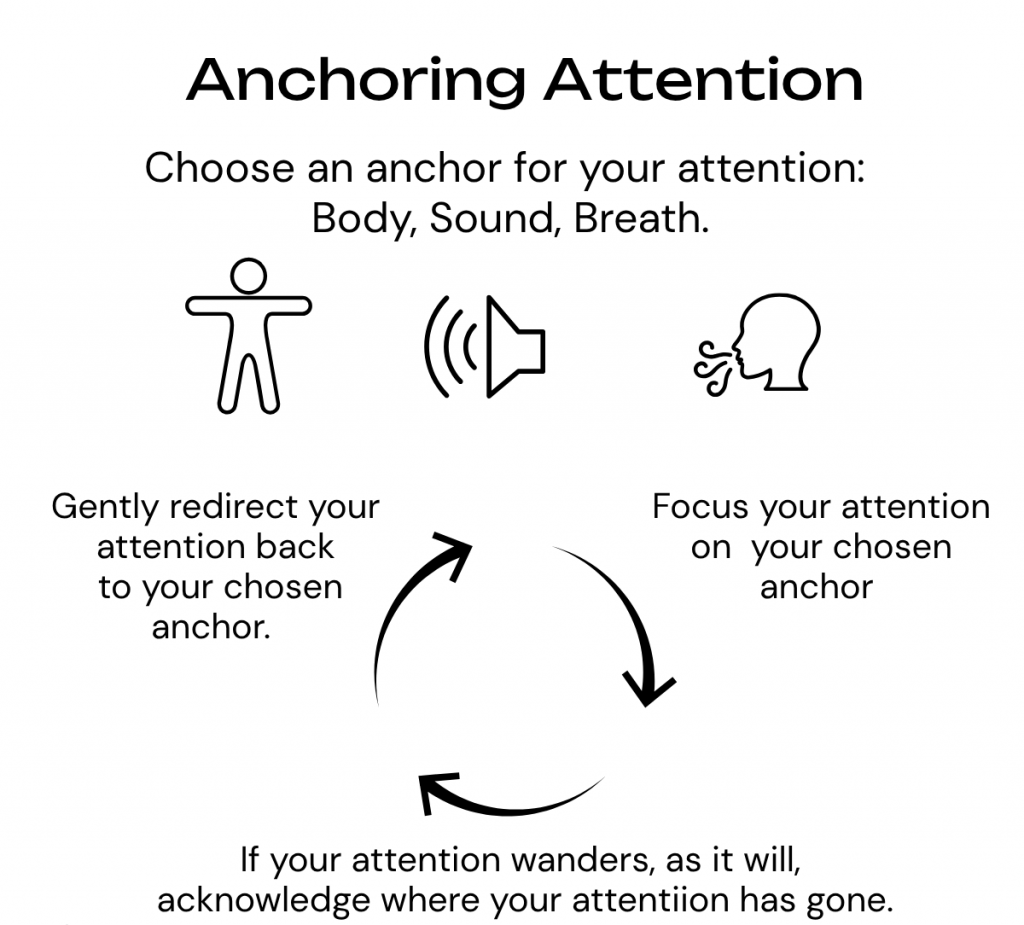
Choosing an anchor for attention during practice helps refocus the mind when attention wanders, which it will. Remember this as your “go to” place, if at any point, a practice becomes overwhelming.
Find the one that works for you – body, breath, or sound.
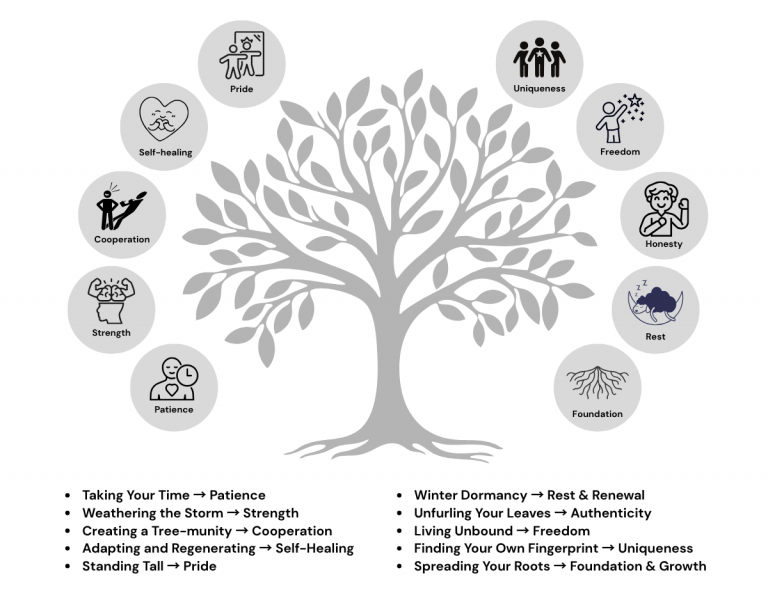
“Be like a tree, with deep roots that reach way down into the ground. When a storm comes, the tree rocks a little and maybe gets a little wet. there’s no knocking down that tree.”
Reacting to stress as a threat that you feel you don’t have the resources to overcome (e.g. time)
Responding to stress as a challenge that will be difficult, but you think you can successfully tackle
Said something you wish you could take back?
Done something that you later regretted?
How long did you think about the thing that you regretted doing before doing it?
How much time have you spent ruminating (obsessive over-thinking) about it
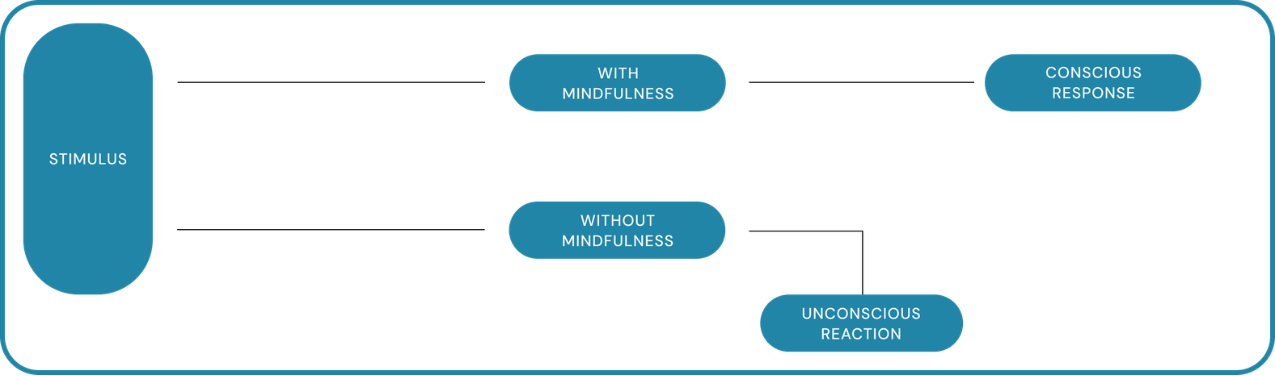
Acting before thinking
Thinking before acting
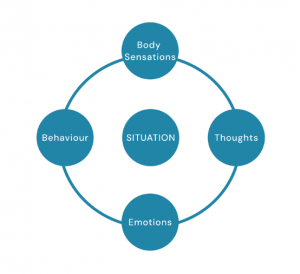
When we quietly reflect internally, focusing on sensations, images, feelings and thoughts, we become more aware of the impact of situations on us and we make better choices.
When we focus closely on tasks in a goal-oriented way, we take on challenges that form deep connections in the brain. When a person is focused on something, they’re paying attention to it.
Attention is like a muscle that can be trained. Just like you go to a gym to build muscles, practicing mindfulness – paying attention, noticing when the attention wanders, and bringing it back, builds the mucle of attention.
Complete the activities:
How Mindfulness Are You? Quiz
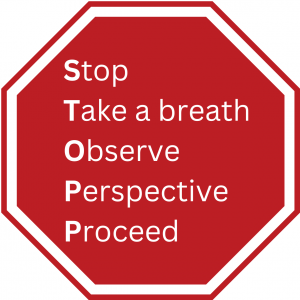
STOPP Practice Activity – Reacting VS Responding
Attention is like a muscle – it can be trained to develop focus and concentration.
Where could you bring mindfulness into your life?
Mindfulness Lesson Activities
Art Activity
Learn More
Web-based Resources
Videos to Watch
We need adversity to grow resilient. Challenges in life, unpleasant as they may be, make us stronger.
Back in 1991 in the middle of the Arizona desert the Biosphere 2 project was being conducted. The trees inside Biosphere 2 grew rapidly, more rapidly than they did outside of the dome, but they also fell over before reaching maturation.
Why did all the trees fall over before reaching maturity?
The conditions in the Biosphere were almost perfect. The temperature, humidity, water was all scientifically maintained, to be what was ideal for optimal grow. But, there was one thing missing…
It was the lack of wind or another way to put it, it was the lack of stress placed on the trees due to no wind in the Biosphere that caused the trees to fall over before reaching maturity.
Without wind, the trees did not develop a solid foundation and root system. They could not support themselves fully. They could withstand normal wear and tear, and survive. In other words, the trees needed some stress in order to thrive in the long run.
How true is this when it comes to human beings. We too need some stress in order to thrive in the long run.

Mind wandering is the experience of your attention drifting away from a primary task toward internal thoughts and memories.
Driven by the brain’s Default Mode Network (DMN), it can be a source of great creativity but can also cause distraction, stress, or rumination if left unchecked.
Excessive mind wandering, often seen in conditions like ADHD, can cause cognitive lapses, reduced performance, and unhappiness (or “unhappy mind”).
It serves as a creative tool, aiding in problem-solving and allowing the brain to generate ideas when not focused on demanding tasks.
The mind wandering during practice is normal; that is what the mind is designed to do. The magic moment is noticing when the attention has wandered from the chosen anchor of attention, and then, gently and kindly bringing it back. It may happen many, many times, during mindfulness practice. Gradually, with practice and over time, awareness of the wandering mind and the refocusing of attention will improve the ability to concentrate.